The racing game genre holds a singular and enduring appeal in the world of interactive entertainment. It offers a universal fantasy: the chance to push the limits of speed and control, to master high-performance machinery, and to experience the white-knuckle thrill of competition—all from the safety and comfort of home. From the bright, chaotic energy of arcade racers to the demanding realism of high-fidelity simulators, racing games encapsulate a core human desire for speed, mastery, and rivalry.
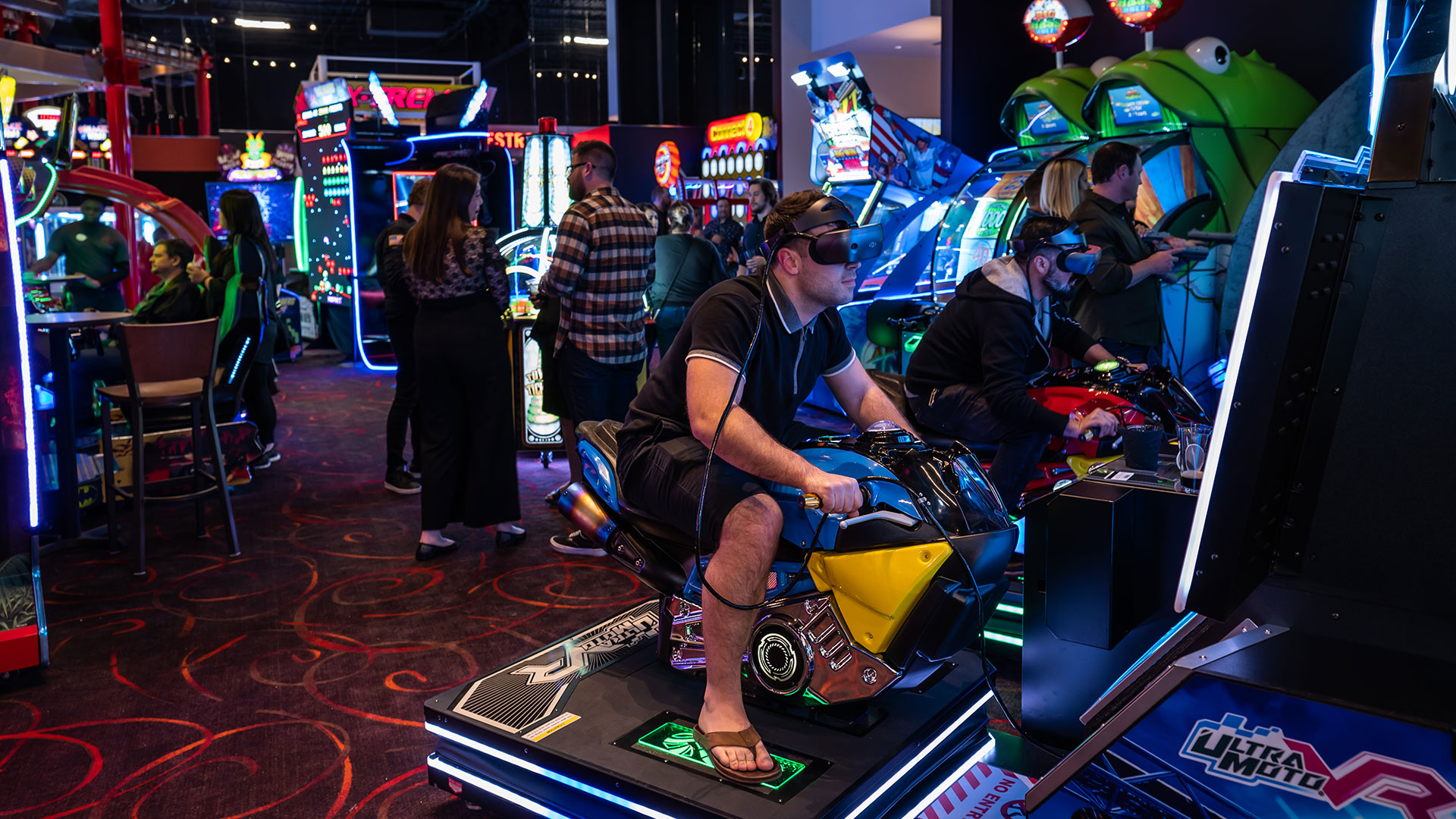
The genre’s longevity is a testament to its diversity and its ability to continually evolve with technology. It provides a unique blend of physical challenge (mastering the controls), cognitive challenge (strategic maneuvering), and psychological reward (the satisfaction of a perfect apex). This article delves into the core components that define racing games, explores their distinct subgenres, and highlights the surprising skills and benefits they impart to dedicated players.
Subtitle 1: The Core Appeal—Speed, Control, and Immersion
At the heart of every great racing game lies a masterful balance between speed and control, coupled with an escalating sense of immersion.
The Fantasy of Unrestricted Speed
The initial attraction is visceral. Racing games allow players to instantly pilot cars, motorcycles, or futuristic vehicles that are financially or physically inaccessible in real life. They offer the thrill of accelerating from zero to top speed in seconds and navigating dangerous curves at G-force levels—a pure, intoxicating rush that directly taps into adrenaline and excitement.
The Mastery of Control
True engagement comes not from speed alone, but from the mastery of vehicle dynamics. This is where the skill ceiling of the genre is established. Players must learn:
- Braking Points: Understanding where to slow down and when to release the brake for maximum efficiency.
- Apex Clipping: Hitting the optimal point in a corner to carry the most speed out of the turn.
- Weight Transfer: Managing the car’s inertia during acceleration, braking, and cornering to maintain traction.
The satisfaction of linking a series of perfect corners is profound, creating a mental flow state where player and machine feel seamlessly connected.
Technological Immersion
Advancements in hardware have continuously enhanced the immersion factor. High-resolution graphics, realistic sound design, and, critically, force feedback steering wheels and pedal sets allow simulation fans to replicate the physics of driving with astonishing accuracy. This immersive hardware translates the digital world into physical sensations, making the stakes feel higher and the sense of control more tangible.
Subtitle 2: The Two Pillars of the Genre
Racing games generally fall into two distinct, yet complementary, subgenres, each catering to a different type of player: Arcade and Simulation.
1. Arcade Racers
Arcade games prioritize immediate fun, exaggerated speed, and accessibility. Physics are typically simplified or ignored, focusing instead on power-ups, over-the-top drifts, and aggressive action.
- Key Characteristics: Easy to pick up and play, high-speed boosting mechanics, competitive player-vs-player interaction often involving weapons or environmental hazards (e.g., Mario Kart, Need for Speed).
- Cognitive Benefit: Enhance reaction time, split-second decision-making, and strategic targeting amidst chaos. They are fantastic for relieving stress and providing quick, satisfying bursts of competition.
2. Simulation Racers (Sim Racing)
Simulators aim for authenticity, replicating the physics, car handling, and track environments with meticulous detail. They often require specialized peripherals and deep knowledge of motorsport mechanics.
- Key Characteristics: Realistic tire wear, fuel consumption, damage modeling, and complex setup adjustments (suspension, aero, gearing). The learning curve is steep (e.g., iRacing, Assetto Corsa).
- Cognitive Benefit: Develop deep focus, consistent precision, and complex problem-solving related to mechanical tuning. Sim racers often develop a better intuitive understanding of real-world physics and trajectory.
Subtitle 3: Beyond Entertainment—Transferable Skills
The skills honed on the digital track have surprising parallels in real-world professional and cognitive domains.
Focus and Consistency
In sim racing, the most difficult aspect is not speed, but consistency. Winning a race requires running thirty or forty perfect laps without error. This demands a sustained level of intense concentration and flawless execution, training the brain to ignore distractions and maintain high performance over long periods—a crucial skill for any high-stakes professional task.
Risk Assessment and Dynamic Planning
Every corner in a racing game involves a rapid calculation of risk versus reward. How late can the player brake without spinning out? Which line offers a better exit speed, even if it risks hitting a curb? This continuous process trains players in dynamic planning and probabilistic thinking, where decisions must be made in fractions of a second based on limited, fast-changing data (e.g., opponent positioning, tire heat, track conditions).
Technical and Mechanical Literacy
For sim enthusiasts, the required knowledge about car setup (aerodynamics, differential settings, camber angles) fosters a deep, practical understanding of engineering and mechanical principles. This pursuit of mechanical optimization is a form of applied physics and computational problem-solving.
Conclusion: The Race Continues
Racing games offer a unique, thrilling, and beneficial form of entertainment. They provide the unparalleled excitement of speed and competition while simultaneously serving as powerful, specialized tools for cognitive development. Whether you prefer the chaotic fun of an arcade sprint or the precise, demanding complexity of a true simulator, the genre invites you to step outside the limits of everyday life and strive for mastery over speed and control.
The digital asphalt is a perfect proving ground, constantly rewarding precision, focus, and a relentless pursuit of the perfect lap, making racing games a timeless staple of digital play.