Before high-speed internet, powerful home consoles, and immersive virtual reality, there was the arcade. A vibrant, noisy cathedral of light, sound, and flashing screens, the arcade was the epicenter of competitive gaming and a crucible for digital innovation. Arcade games—those coin-operated cabinets that dominated the 1970s and 80s—were more than just entertainment; they were cultural phenomena that defined generations and laid the foundational mechanics for nearly every video game genre that followed.
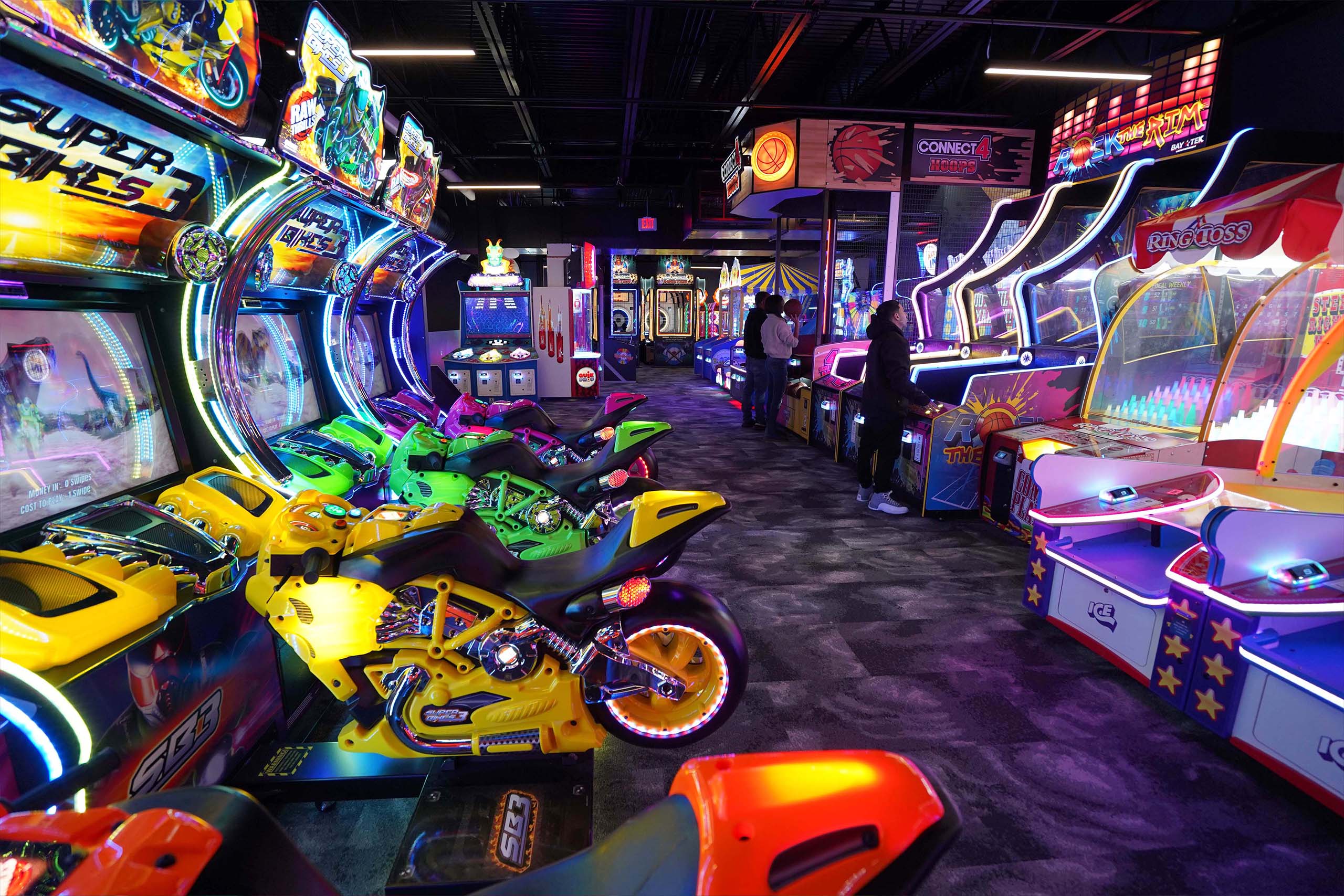
The enduring appeal of arcade games lies in their purity of design, their focus on uncompromising challenge, and their unique social environment. While the physical arcade may be less ubiquitous today, the spirit of those original titles—driven by the quest for the high score and fueled by quarters—continues to influence modern game design and captivate players of all ages. This article explores the legacy of arcade games and why their simple, yet addictive, formulas remain a timeless icon of play.
Subtitle 1: The Design Principles of the Quarter-Muncher
Arcade games operated under a strict, unforgiving business model: they had to be easy to learn and incredibly difficult to master, ensuring players kept feeding them coins. This constraint led to a set of elegant design principles that prioritize immediate engagement and eternal replayability.
Simplicity and Immediate Accessibility
Arcade games feature mechanics that are instantly understandable. Games like Pac-Man require only a joystick, while Space Invaders needs a single button and left-right movement. There were no lengthy tutorials or complex storylines; the game had to communicate its core concept within seconds. This focus on intuitive controls and immediate feedback made them accessible to everyone, regardless of prior gaming experience.
The High Score as the Ultimate Goal
Unlike modern console games built around completing a story, arcade games were fundamentally about the pursuit of the high score. The core loop was simple: earn points, survive longer, and beat the record displayed on the screen. This system fostered intense local competition, turning the machine’s leaderboard into a social statement. The competitive rivalry, driven by public performance and recognition, was a massive part of the appeal.
Uncompromising Difficulty and Skill Scaling
Arcade games are notoriously difficult, a feature baked into their monetization model. As players progressed, the speed increased, enemies became smarter, and lives became scarcer. This difficulty curve was not arbitrary; it was designed to reward pure skill, dedication, and pattern recognition. The goal was not to let the player win, but to challenge them constantly, rewarding skill mastery with the chance to see the next level or achieve a truly legendary score.
Subtitle 2: The Cognitive and Social Benefits of the Arcade Era
The experience of playing arcade games offered cognitive benefits that were distinct from modern home console gaming, primarily due to the unique environment.
Enhancing Reaction Time and Focus
The nature of arcade gameplay, particularly in genres like shoot-’em-ups (Galaga, R-Type) and platformers (Donkey Kong), demanded hyper-focused attention and split-second decision-making. Players were constantly practicing fast hand-eye coordination and rapid visual processing, essential skills for success in any high-speed environment. This training created a profound “flow state” where the player’s focus was absolute.
The Social Melting Pot
The physical arcade was a vital social hub and a communal gaming experience unmatched by today’s isolated home setups.
- Observation and Learning: Standing shoulder-to-shoulder with other players allowed for direct observation. You learned new strategies and discovered hidden game mechanics simply by watching masters play.
- Competition and Camaraderie: The noise, the lights, and the crowd gathered around a high-score attempt created an electrifying atmosphere. This instant, face-to-face competition fostered social bonds, provided instant bragging rights, and encouraged a sense of community around the shared love of the games.
Subtitle 3: The Arcade Legacy in Modern Gaming
While arcades may no longer be on every corner, their design philosophy remains the backbone of contemporary game design, proving the timeless nature of their principles.
Influencing Game Design
Many modern genres owe their existence directly to the arcade. Fighting games were pioneered by Street Fighter; the beat-’em-up genre was cemented by Double Dragon; and the twin-stick shooter genre evolved from arcade concepts. Furthermore, the modern emphasis on short, addictive gameplay loops in mobile gaming and daily challenges in live-service games is a direct descendant of the arcade’s core design philosophy.
The Resurgence and Preservation
Today, the arcade spirit lives on through several avenues:
- Emulation and Re-releases: Classic titles are continuously re-released on modern consoles, accessible to new generations of players.
- “Barcade” Culture: Arcades have found a modern home in entertainment venues that combine classic cabinets with food and drink, recreating the social atmosphere of the golden age.
- Indie Development: Many independent game developers actively emulate the retro aesthetic and punishing difficulty of the arcade era, proving that pixel art and pure skill challenges are still highly marketable.
Conclusion: The Unbeatable Formula
The arcade game genre is a testament to the fact that technological complexity does not equate to superior entertainment. The simplicity, the immediacy, and the uncompromising pursuit of mastery found in those coin-operated cabinets created a powerful, addictive, and enduring formula for fun.
The legacy of the arcade is not just in the games themselves, but in the foundation they built for the entire video game medium. They taught us the joy of a pure, skill-based challenge and the camaraderie of a shared high-score hunt, ensuring that the golden age glow of the arcade remains a timeless, influential icon of digital play.