In the early 1990s, the video game industry was dominated by two titans: Nintendo and Sega. The idea of a third player entering the market was often dismissed as a fool’s errand. However, born out of a failed partnership and a drive for technical innovation, Sony’s PlayStation emerged to not only challenge the status quo but to fundamentally change the way the world perceives interactive entertainment. Today, the PlayStation brand stands as a pillar of pop culture, representing decades of hardware breakthroughs and storytelling mastery.
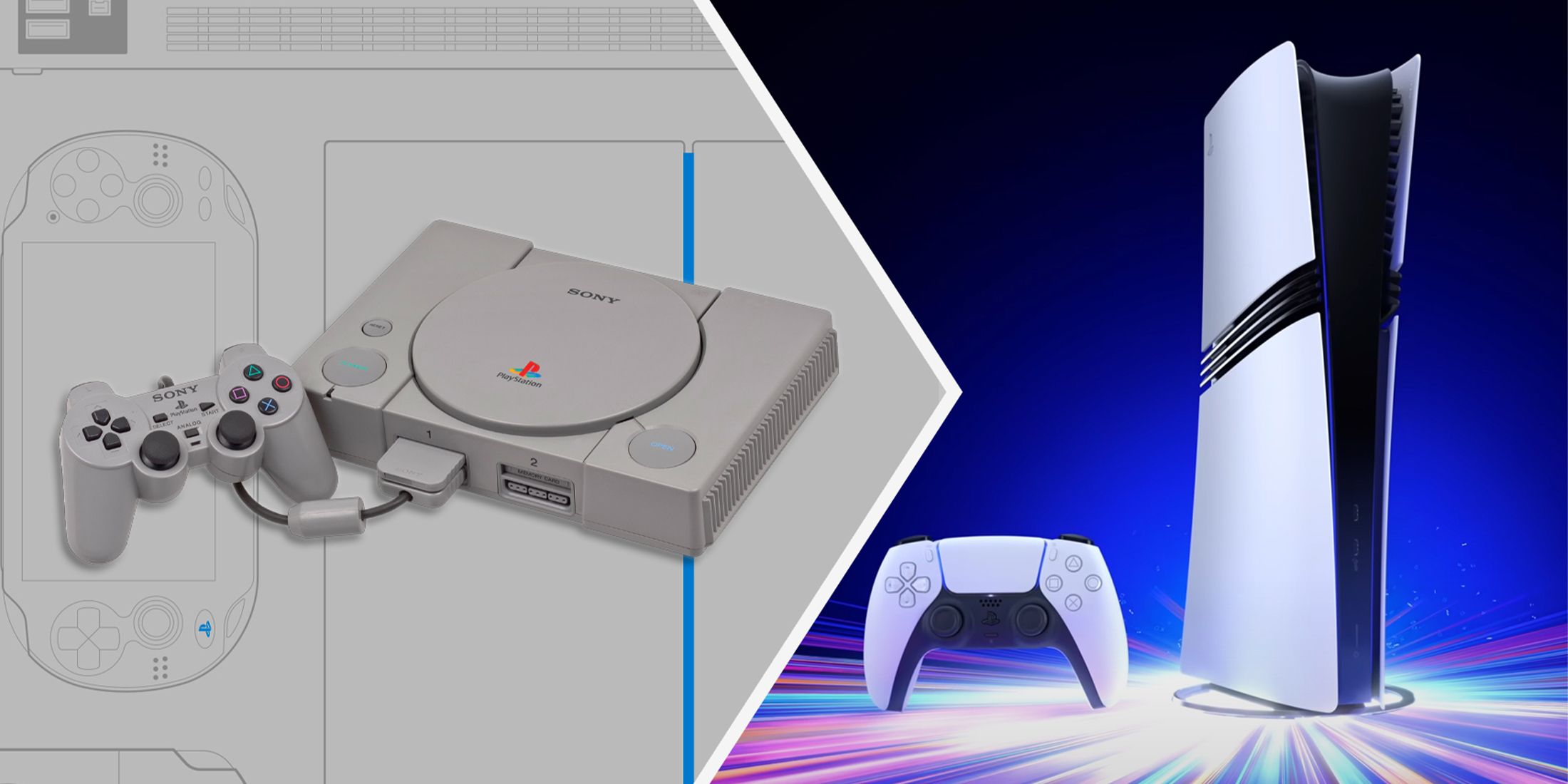
The journey of PlayStation is a narrative of evolution—from the transition from 2D sprites to 3D polygons, to the birth of the digital ecosystem and the current frontier of ultra-high-definition virtual reality.
The Birth of a Legend: The Original PlayStation (1994)
The origin of the PlayStation is one of the most famous stories in tech history. Originally intended as a CD-ROM add-on for the Super Nintendo, the project was scrapped by Nintendo at the last minute. Ken Kutaragi, often called “The Father of PlayStation,” convinced Sony leadership that the company should release its own console.
When the PlayStation launched in Japan in late 1994 (and 1995 globally), it brought a “cool factor” that gaming had previously lacked. It swapped the traditional cartridge format for Compact Discs (CDs). This was a game-changer. CDs were cheaper to produce and offered significantly more storage space, allowing for cinematic FMV (Full Motion Video) cutscenes and high-fidelity soundtracks. With iconic titles like Final Fantasy VII, Metal Gear Solid, and Gran Turismo, the PlayStation proved that games were not just for children—they were for everyone.
The Dominance of the PlayStation 2: The DVD Revolution
If the first PlayStation put Sony on the map, the PlayStation 2 (PS2), released in 2000, conquered the world. To this day, the PS2 remains the best-selling video game console of all time, with over 155 million units sold.
The genius of the PS2 was its dual identity. It was a powerful gaming machine, but it was also one of the most affordable DVD players on the market at the time. For many families, the PS2 was their first entry into the world of home cinema. This Trojan Horse strategy ensured the console was in living rooms everywhere. This era also saw the refinement of the DualShock controller and the birth of legendary franchises like God of War, Ratchet & Clank, and the rise of the Grand Theft Auto series as a cultural phenomenon.
The PlayStation 3: A Rocky Start and a Strong Finish
In 2006, Sony launched the PlayStation 3 (PS3). It was an ambitious, highly complex machine powered by the “Cell Broadband Engine.” However, it faced a difficult launch due to a high price tag and a complicated architecture that made it difficult for developers to program games.
Despite the initial hurdles, Sony pivoted brilliantly. They introduced the PlayStation Network (PSN), bringing online gaming and digital storefronts to the forefront. They also embraced the Blu-ray format, which eventually won the high-definition disc war. More importantly, the latter half of the PS3 era established Sony’s reputation as a leader in first-party, narrative-driven exclusives. Titles like The Last of Us and Uncharted demonstrated that games could rival Hollywood cinema in terms of emotional depth and production value.
The PlayStation 4: Refinement and Social Connectivity
The PlayStation 4 (PS4), released in 2013, was a return to form. Sony listened to feedback from developers and designed a console that was powerful, developer-friendly, and focused purely on the gamer. The motto “Greatness Awaits” resonated deeply with the community.
The PS4 era was defined by the perfection of the open-world genre and the “Share” button, which integrated gaming with social media. It was also during this generation that Sony took a massive leap into the future with the launch of PlayStation VR (PSVR), making virtual reality accessible to the console market for the first time. Masterpieces like God of War (2018), Horizon Zero Dawn, and Bloodborne solidified the PS4 as a must-have system for fans of deep, immersive single-player experiences.
The PlayStation 5: The Era of Speed and Immersion
In 2020, Sony launched the PlayStation 5 (PS5), ushering in a new generation defined by the elimination of loading screens. The inclusion of a custom Solid State Drive (SSD) changed the fundamental design of games, allowing for instant travel across vast digital worlds.
The PS5 also introduced the DualSense wireless controller, which uses haptic feedback and adaptive triggers to simulate physical sensations—like the tension of a bowstring or the pitter-patter of rain. With support for 4K resolution at 120 frames per second and ray tracing, the PS5 has blurred the lines between reality and digital animation. Even as it moves toward a more digital-centric future with “PlayStation Plus” subscription tiers, Sony remains committed to the high-end hardware experience.
Conclusion: The Legacy of Innovation
The evolution of PlayStation is more than just a list of hardware specifications; it is the story of how Sony adapted to the changing desires of gamers for over three decades. Each generation brought something new: 3D graphics with the PS1, home cinema with the PS2, online connectivity with the PS3, social integration with the PS4, and unparalleled speed with the PS5.
Sony’s success lies in its ability to balance technological power with emotional storytelling. As we look toward the future—whether it involves cloud gaming, advanced AI, or even more immersive VR—the PlayStation brand remains a symbol of quality and innovation. It has transformed from a “grey box” in the corner of a room into a global ecosystem that connects millions of people through the power of play.